A sermon preached at St James Episcopal Church, St James, NY
(Because of the presence of children in the congregation, some of whom are not aware of the deaths at Sandy Hook Elementary, and others who are very upset, I have avoided explicit mention of them)
one of the highlights of the lead up to Christmas
was opening the doors of my Advent calendar, one by one.
The anticipation grew daily
until that final day, when I could open the double doors
and see the picture
of the baby in the manger.
It’s not a whole lot different now. I might have switched from a cardboard Advent calendar
to the Jacquie Lawson one on my computer that my mother sent me
but still I count down the days.
The tree is up,
and it’s almost time
to start decorating the church.
Christmas
is almost here.
But this Advent, this season of anticipation,
has been marred for many of us
by the events in Newtown
just over a week ago.
This is supposed to be a season of joy;
instead, it has become a season of sorrow.
We don’t know what to say;
we feel slightly guilty
as we continue with our holiday preparations.
It feels like the spirit of the season
has somehow been broken.
Which is why
when I turned to our New Testament reading today
it felt kind of right.
At first glance, we wonder,
what is it doing here?
Here, the fourth Sunday of Advent,
when with the story of Mary visiting Elizabeth, and her song, the Magnificat,
we are launched into the joyful expectancy that will come to fruition tomorrow night,
why are we reading
about sin and sacrifice and the will of God?
It feels more like Lent.
But Lent
is where many of us have found ourselves, this last week,
facing the reality of sin and death,
and longing for the coming of a Messiah who will bring light and life.
And it is that experience of the power of sin and evil among us
that the writer of the letter to the Hebrews
is naming,
that experience
and the desire to do something about it.
Our reading this morning
was part of a much longer argument
about the nature of law and sin
and sacrifice.
And of course it comes from a time and culture
when those things defined how religion
and life in general
was practiced.
Jewish belief followed a system of ritual law:
obey them
and you were right with God;
disobey them
and you were in trouble.
The laws weren’t so much about safety
or rights, or limits,
as about defining your actions
so that you would know how to live,
so that you would know how to live a life of
purity, integrity, honesty, reverence.
The laws laid out what an ideal life looked like.
But because pretty much no one could obey them all,
there was a system to ensure forgiveness,
a system of sacrifice.
Bulls, sheep, goats, doves, pigeons,
offered
so that transgressions of the law
might be forgiven.
And the idea was
that after the sacrifice,
you began again with a clean record,
and ideally
next time round
got it right.
But, says the letter to the Hebrews, it didn’t work.
Year after year
the sacrifices were made
and year after year
people returned to their old habits of sin.
So what was the point?
When I was in Israel in September
we went camel riding.
I wanted a photo of myself on the camel. But unfortunately,
I was riding, and so was everyone else,
and it was too difficult to pass over my camera.
So what I did, was take a photo of my shadow.
You can clearly see the camel, and can kind of tell it’s me,
if you know the type of hat I’m wearing.
But that’s about all.
The system of law and sacrifice in the Old Testament
is, says, Hebrews, like a shadow,
a shadow of what is to come. You can kind of see
what God intended,
but only a vague outline.
The reality
will be so much clearer, so much more beautiful, so much more full of life.
The system of law and sacrifice
is a shadow of what will come
when Christ, who was the one sacrifice for all time, comes to reign in all his glory
and evil is destroyed
and all things are brought into the new creation
where everything
is good.
But now we live somewhere in between.
To continue the metaphor,
if the old system of law and sacrifice
is a shadow,
and the coming of Christ in glory at the end of time
is the reality,
what we have
is a photograph.
We can see what it will be like,
but it’s only two dimensional.
We don’t get
the full three dimensional
reality.
So here we are, living in the in between times.
we know that Christ died for us,
we know that his sacrifice is one
that brings us forgiveness,
one that is effective for all time.
Jesus has come
“to mend what was broken,
to rebuild what had been destroyed,
to bury the hatchet,
to recover what was lost,
and to make peace between God and us.”
Christ has entered humanity
and given us new access to the mercy, grace, steadfastness, faithfulness and love of God.
And in Christ, God has inaugurated a new covenant
one written on our hearts
that would give us
the knowledge and desire
to do the will of God.
But
the reality is
that we still have
free will.
We still get to choose
what we do,
whether to do the will of God,
whether to live our lives as echoes of God’s mercy, grace, steadfastness, faithfulness and love.
To do the will of God
with all the strength that God’s Spirit provides.
Or to do otherwise.
And that’s where sin and evil
have their insidious tentacles in our lives.
We know what is right.
But we don’t always do it.
And that’s hard to admit.
What happened in Newtown last week
was not an isolated event.
The horror of it was extreme,
but it’s just one of many similar events
that happen each year in our country.
Violence is systemic in our culture
and in our world
and we are part of it.
So how do we respond, as Christians
who particularly at this time of year
proclaim our faith
in the Prince of Peace?
I think
that we have to fight against violence
in any
and every form.
And that includes
dealing with the problem of gun violence.
It you go back to the stories of the Old Testament,
the stories that cemented the identity of the people of God in ancient Israel,
they were stories of war.
The books of Joshua and judges, 1 and 2 Samuel and 1 and 2 Chronicles
are littered with accounts of battles.
The people of God
were a warrior people
who took their promised land by force
and defended it
with military might.
But over time, things changed.
They were conquered by foreign powers.
Some were taken into exile.
Some returned.
And Isaiah, perhaps the greatest prophet,
shared a new vision with them.
A vision that was not simply a return to what they had in the past,
but something entirely new:
The word that Isaiah son of Amoz saw concerning Judah and Jerusalem.
In days to come
the mountain of the Lord’s house
shall be established as the highest of the mountains,
and shall be raised above the hills;
all the nations shall stream to it.
Many peoples shall come and say,
‘Come, let us go up to the mountain of the Lord,
to the house of the God of Jacob;
that he may teach us his ways
and that we may walk in his paths.’
For out of Zion shall go forth instruction,
and the word of the Lord from Jerusalem.
He shall judge between the nations,
and shall arbitrate for many peoples;
they shall beat their swords into plowshares,
and their spears into pruning-hooks;
nation shall not lift up sword against nation,
neither shall they learn war any more.
O house of Jacob,
come, let us walk
in the light of the Lord!
God promised a new covenant,
and with it
the vision
of a new reign of peace.
That new covenant
was inaugurated
in Christ.
That’s the whole point of our reading from Hebrews.
We live in a new
and different world,
and that means
living differently.
We, as Americans, live in a culture
that is in some ways
not a whole lot different
from that of ancient Israel.
Our nation has, in the past,
used military might and force
 to establish and protect itself.
It is part of our identity.
But God challenges us.
God challenges us
with the coming of the Prince of Peace
to let go of that violent past,
to allow our identity
to be reshaped
into something that echoes
the mercy, grace, steadfastness, faithfulness and love of God.
To update the metaphor of Isaiah,
to turn our semi-automatics into knitting needles,
our guns into gardening tools.
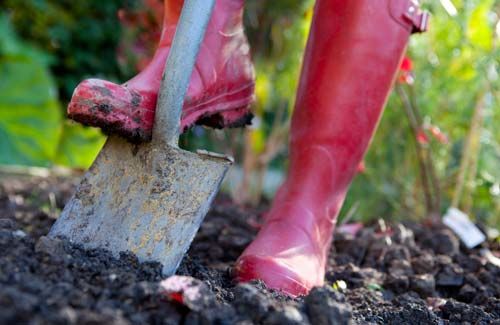 You may think this sermon was too political,
that I’ve gone from preaching to meddling.
But if our faith has any validity
it has to shape how we actually live, in tangible ways.
This is where the rubber hits the road.
We follow the Prince of Peace.
And if our words proclaimed in baptism and reaffirmed in confirmation
are not empty,
if when we say “I turn to Christ”, and
“I renounce evil”
we really mean it
then we have to act, we have to act
regardless of the cost.
As we move into the celebration of Christmas
as the angels sing, “Peace on earth,”
may the Christ Child, the Prince of Peace, be born in us
and through us, in our world,
today.
 Contrast that with the photo that I took last Fall, of birds once again perched on a wire. But this was no train station; instead, it was the barbed wire looped along the top of a wall that divides the West Bank from Israel. Turn the other way, and you see a pile of rubble where a house was recently bulldozed, evidence of continuing political conflict. This is Bethany - the place where Jesus raised Lazarus, and where Mary anointed his head with oil in preparation for his death.
 And that hope is at the core of our mission as Christians. We proclaim the transformative hope of Christ, and we demonstrate it in our lives. Being “in Christ,” as the apostle Paul puts it, allows us to let go of our own self-obsessions and open our lives to others, reaching out to them with the love and hope of Christ.


